
How to choose mattress firmness: a simple guide
How to choose mattress firmness: match it to your sleep position and weight, test it for the length of a trial, and know when to ask a professional.
Camille Laurent4 min read

Verdict: if you are unsure, choose medium firm. It is the usual middle choice, and it suits many sleepers. The best mattress firmness is the one your body feels supported on after a few weeks.
How to choose mattress firmness depends on your sleep position, your weight and your own comfort. This page gives general guidance. For back pain or a medical condition, ask a doctor or physio.
The decision rule
- Find your main sleep position.
- Use the table below as a start.
- Pick a mattress with a sleep trial of at least 30 nights.
- Give it two to four weeks.
Ruling: buy the middle, test it, and move only if it fails.
Firmness by sleep position
| Position | Often suits |
|---|---|
| Side | Soft to medium. Lets shoulders and hips sink in |
| Back | Medium to firm. Keeps the spine in line |
| Stomach | Firm. Stops the hips sinking |
| Mixed | Medium firm |
This is a general guide, not a law. Owners often report that comfort is personal.

Weight changes the feel
A heavier body sinks deeper into a mattress. That makes a given mattress feel softer. A lighter body sinks less, so the same mattress feels firmer. If you are heavier, a firmer choice is often better. If you are lighter, a softer one may suit.
Couples with different weights face a hard pick. Medium firm is the usual compromise, and some beds offer two firmness sides.
Firmness vs support
These two get mixed up. Firmness is how hard the top feels. Support is how well the whole mattress holds your spine in line. A soft mattress can still support well. A firm one can leave your back unsupported if it sags. A good test: lie on your back, and slide a hand under your lower back. A small gap is normal. A large gap or no gap may mean a poor fit.
Try before you commit
Lying on a mattress for five minutes in a shop tells you little. Sleep on it for several nights. Ask about a trial and about returns, and read the fee terms. A trial is the most useful feature you can buy.
See memory foam vs hybrid mattress for the type decision, and mattress topper or new mattress if your current bed is just a bit too firm.

Worked example
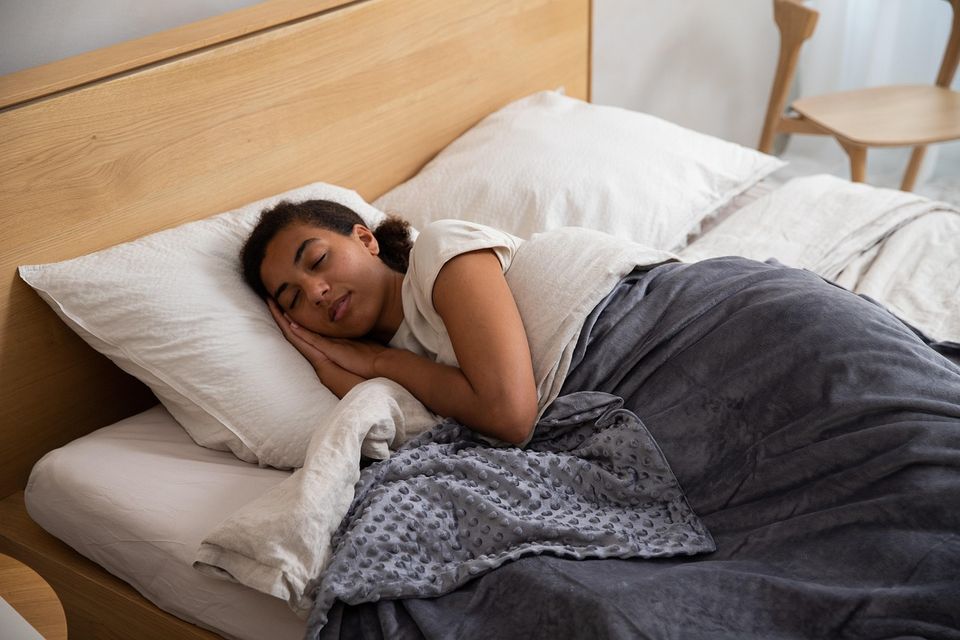
Say you sleep on your side and weigh below average. A soft to medium mattress will likely feel right. Say your partner sleeps on their back and weighs more. A medium firm to firm mattress likely feels better to them. A medium firm bed is a safe middle for both. A topper on their side is another fix.
When pain is the reason
If you are shopping because your back hurts, a new mattress may help, but it may not be the cause. Ask a doctor or physio. Do not buy an expensive bed on a promise to cure pain.
Common mistakes
- Choosing by showroom feel alone.
- Going very firm because of a belief that firm is healthy.
- Ignoring the trial and returns terms.
- Not checking your pillow, which also changes spine position.
Quick questions
What mattress firmness is best for most people?
Medium firm is the common middle choice.
Is a firm mattress better for back pain?
Not necessarily. Comfort and support matter. Ask a doctor or physio for pain.
How long should I test a mattress?
Give it at least two to four weeks.
Does body weight change the best firmness?
Yes. Heavier people sink more, so they often prefer firmer. Lighter people often prefer softer.
More to read
Keep reading

LED vs halogen bulbs running cost: the sums
LED vs halogen bulbs running cost? An LED typically uses about a seventh of the power, so it pays back fast in rooms you light for hours every day.
Camille Laurent2 min read

Memory foam vs hybrid mattress: which suits you
Memory foam vs hybrid mattress: pick foam for partner motion and pressure relief, and a hybrid if you sleep hot or want a bouncier, firmer feel.
Camille Laurent4 min read

Dehumidifier vs moisture absorber: which stops damp
Dehumidifier vs moisture absorber: a dehumidifier removes lots of moisture from a room, while absorber tubs only suit small spaces such as cupboards.
Camille Laurent4 min read
Mattress topper or a new mattress
A topper fixes surface comfort. It cannot fix a sagging mattress. A quick check tells you which problem you have before you spend money.
Camille Laurent2 min read

Do you need a rug pad? When it helps and when it does not
Do you need a rug pad? Yes on hard floors, where it stops slipping and protects the floor. On thick carpet, a pad is often not worth it.
Camille Laurent2 min read

Cotton vs linen sheets: which sleeps better
Cotton vs linen sheets: cotton feels smooth and crisp and costs less, while linen breathes well and softens with every wash. See which suits you.
Camille Laurent3 min read